Monday, June 7, 2010

The words my heart cannot express

I'm not someone who cries. Well, at least not unnecessarily.

Maybe I lost that propensity through paramedic training, an unspoken lesson in developing professional demeanor. Maybe the cynicism of a career in the news business did this to me. At any rate, it's unusual for me to cry.

But lately, unexpectedly, my eyes will fill with tears. I do not need to be thinking of my Dad for this to happen, though the tears immediately remind me of him and his existence/life at his memory care facility. I miss him so much, though he is not entirely gone. He is slipping away or fading, as I've heard it called. I say he is stuck between the here and the hereafter.

It was October 2008 when I toured the facility where he would move a few weeks later. The administrator was kind enough and spoke knowledgeably about long term care. He showed us around. Silverado's single-floor building was designed to allow for wandering safely. At meal times, residents could exit their rooms and turn left or right and either way, the hallway would eventually feed them into the dining room. Outdoors, the pathway terrain alternated from pavement to gravel, giving residents the perception of traveling further than reality. There were spots for gardening, a cage full of parakeets and canaries, a juke box, and, best of all, dogs who lived there.

The tour began to feel a little like the tours of day care centers I'd taken not too many years before when my children were babies. Directors of day cares similarly touted their centers' features, policies and various activities.

The Silverado administrator let us peek at some rooms, and then he pointed out the memory cases on the walls outside of each resident's room. These were glass-enclosed shelves similar to shadow boxes, but bigger, and they reminded me of the cubby space at daycare that parents are invited to personalize with photographs and mementos.

Before I knew what was happening, I was sobbing, crushed by the thought of the memory case that would be my Dad's. He was 68 years old. How were we supposed to boil his life down to three shelves?

I cried, but I quickly composed myself. Just as I do now whenever my eyes start watering.

"There is a sacredness in tears.
They are not the mark of weakness, but of power.
They speak more eloquently than ten thousand tongues.
They are messengers of overwhelming grief...and unspeakable love.”
--Washington Irving

Sunday, June 6, 2010

Research into cognition explains some age-related memory loss

You really can't teach an old dog new tricks. Well, not if you expect the dog to remember the trick.

Through research into cognitive decline, scientists have demonstrated that "there is a biological reason why people cannot learn new things at an older age, but can retain knowledge learned years before," says John Morrison, dean of basic sciences and the graduate school of biological sciences at Mount Sinai School of Medicine.

Certain types of specializations on nerve cells called "spines" are depleted as someone ages, causing cognitive decline in the part of the brain mediating the highest levels of learning, he explains in a study published June 2 in the Journal of Neuroscience.

We lose certain spines as we age, but this study explains which ones and how their loss impacts cognition--which may lead scientists to develop new therapies that target age-related cognitive decline.

The research team studied six young adult and nine older rhesus monkeys as they participated in a delayed response test. The monkeys watched as food was baited and hidden. Then a screen was put in front of them so they could no longer see the location of the hidden reward. At the beginning of the test, the screen was raised immediately, and the monkeys found the reward right away. The memory of the monkeys was tested by increasing the time the reward was blocked from view. The aged monkeys performed significantly worse on the tests than young monkeys, especially as the time intervals increased, researchers reported.

They then studied the microscopic changes in the nerve cells within the prefrontal cortex, an area of the brain that mediates high level learning. Nerve cells in this area contain both thin, dynamic spines which are key to learning new things, as well as large, mushroom-shaped spines that likely mediate long-term memories and expertise. The older monkeys lacked the thin spines but retained the larger spines, "indicating that the loss of the thin spines may be responsible for monkeys' inability to learn and retain information during the test," says a news release from Mount Sinai.

Friday, June 4, 2010

An extended family, a photographer's studio and a camera


We gathered for what we knew would be our last formal family portraits. It was Thanksgiving 2008, just after Dad had officially moved into a memory care facility. His wife, two children and six grandchildren donned clothing in matching shades of navy and khaki and directed him into a photographer's studio.

Dad was in decent spirits that day. He would generally sit where he was asked and smile when he was told. In the midst of the sitting, my then 11-year-old son held my point-and-shoot camera--and snapped this photo of his Grandpa.

It became my favorite after my son explained why he took it: because Grandpa looked as if he was looking for something and didn't know what.

Thursday, June 3, 2010

A curious study of Agatha Christie and Alzheimer's -- and how our writings may one day be used for diagnosis


The language of people with Alzheimer's disease includes significantly more indefinite words and repetitions than the language of healthy people of similar age and level of education.

So, an English professor at the University of Toronto, Ian Lancashire, analyzed the writing of British mystery writer Agatha Christie.

Previously, the works of British novelist Iris Murdoch were analyzed for signs of the Alzheimer’s disease that was confirmed after her death. Science Blog reported in 2004 that "while the structure and grammar of Murdoch's writing remained roughly consistent throughout her career, her vocabulary had dwindled and her language simplified in her very last novel."

Christie was never diagnosed with Alzheimer's. She continued to write in her final years, though some people believed she suffered from dementia.

Lancashire says her 73rd book, "Elephants Can Remember" is universally dismissed by critics as being full of errors and poorly plotted. The main character is a female novelist who struggles with memory loss while trying to solve a crime that happened in the past.

The professor told National Public Radio that when he read the book, he felt Christie was sensing what was happening to her, and that she kept writing "struck me as heroic."

His study involved feeding the text of 16 of her novels into a computer program that analyzed the vocabulary for the frequency of different words and the number of different words in each novel. "The richness of the vocabulary of Christie’s novels declines with her age at composition. The three novels that she wrote in her 80s, (Nemesis, Elephants, and Postern of Fate,) have a smaller vocabulary than any of the analyzed works written by her between ages 28 to 63," he writes.

Christie was 81 when she wrote the Elephants novel. Her use spiked of what Lancashire called indefinite words--"thing," "anything," "something," "nothing." At the same time, the number of different words Christie used dropped by 20 percent. "That is astounding," Lancashire told NPR. "That is one-fifth of her vocabulary lost."

Most of us don't have large collections of writing done over the course of our lives. But Lancashire points out in his conclusion that "this will begin to change as more individuals begin to keep, if only by inertia, a lifetime archive of e-mail, blogs, professional documents, and the like.

"While the diversity of topics and genres in such an archive brings methodological problems to the analysis ... we can nonetheless foresee the possibility of automated textual analysis as a part of the early diagnosis of Alzheimer’s disease and similar dementias."

Wednesday, June 2, 2010

What's in a name?

Both my first-born and my brother's first-born children have the same middle name as their grandfather: Cleveland.

It's an old family name.

A paternal uncle with a few "greats" before his name was Grover Cleveland, who was the 22nd and 24th president of the United States. He died just over 100 years ago, in 1908. He spent part of his boyhood growing up in Fayetteville, NY, and I drive by Academy Street where his former home still stands almost every day.

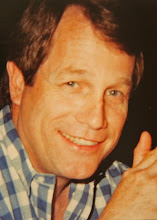
Look at the pictures of Cleveland, the president, and compare the stately way with which he holds his head with the looks of Cleveland, my Dad in this picture taken at Silverado Senior Living where he has lived since October 2008.

President Cleveland was a lawyer and a long-time bachelor. He served as mayor of Buffalo and governor of New York before becoming president, and so far he is the only president to serve two nonconsecutive terms. Historians say he was known for his laser-sharp focus, and they say he was at first ill at ease with the niceties of life in the White House. He's described as "honest, fearless and hard working," in the 2006 Scholastic children's book, "Grover Cleveland."

One of the many Grover Cleveland biographies says much about the man with its title, "Grover Cleveland: A Study in Character," by Alyn Brodsky. The book quotes another biographer who calls Cleveland a paradigm of honesty, integrity and resolution who acheived greatness through strength of character; a man who, though flawed, exemplified "courage that never yields an inch in the cause of truth, and that never surrenders an iota of principle to expediency."

Of course, strength of character isn't necessarily handed down through generations, though I'd like to think it is. And I realize that many people hold their bodies square and firm for portraits, making them no more or less "stately" than either Cleveland. Still, I like to think we can trace some traits through our lineage.

Is/was my Dad honest and hard working and principled because his namesake was? Have my son and nephew inherited those traits, too? Sometimes I fret about what their genes hold: the same frontotemporal dementia that afflicts my Dad? Or something benign, like fearlessness or laser-sharp focus, even an aptitude for the law?

Tuesday, June 1, 2010

Factors that may increase risk

Four factors are associated with an increased risk for Alzheimer's disease and cognitive decline. They are not necessarily causes, but science has noticed some meaningful connection between these things and an increased risk for Alzheimer's and cognitive decline. They are:
* diabetes,
* the gene variation ApoE,
* current smoking, and
* depression.

Evidence is not as strong for a connection between estrogens or nonsteroidal anti-inflammatory drugs and an increased risk for Alzheimer's, and there's no evidence of a connection between estrogens or NSAIDS and cognitive decline.

There is also not a consistent association involving cholesterol-lowering medicine, obesity, high blood pressure or blood homocysteine levels for either Alzheimer's or cognitive decline.


state-of-the-science conference statement

Factors that may decrease risk

Three factors are associated with a decreased risk for Alzheimer's disease and cognitive decline. These are not necessarily causes, but meaningful connections. They are:
* cognitive engagement, through literacy and social enrichment,
* physical activity later in life, and
* a diet low in saturated fat and high in vegetable intake.

In addition, light to moderate alcohol intake seems to be associated with reducing the Alzheimer's risk, but not for reducing the risk of cognitive decline.

There is not a consistent association involving the use of gingko biloba, beta-carotene, flavonoids, multivitamins or vitamins B12, C or E.


Read my previous post about what reduces risk (or doesn't)

Download the 21-page "Preventing Alzheimer's Disease and Cognitive Decline"
state-of-the-science conference statement